%
Improvement in
Reading retention
%
Of Students struggle
with dyslexia
%
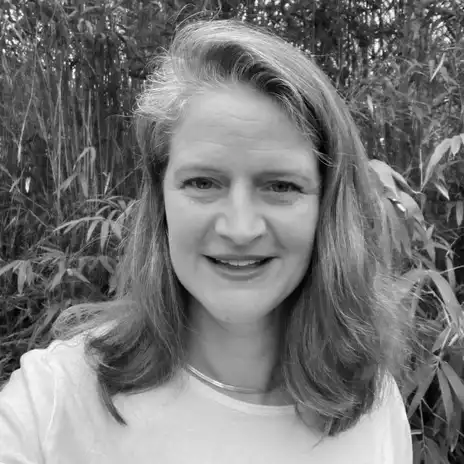
Amy Aden Dunn is a seasoned special educator with over 20 years of experience supporting students with learning disabilities, autism, and reading challenges. Trained in programs such as Orton-Gillingham and Lindamood-Bell, she has taught in both public and private schools across the DC area. Amy continually pursues new approaches to help learners succeed and holds a BA from Georgetown University and an MA from American University. Outside the classroom, she enjoys life with her husband and three sons, who keep the learning going at home.
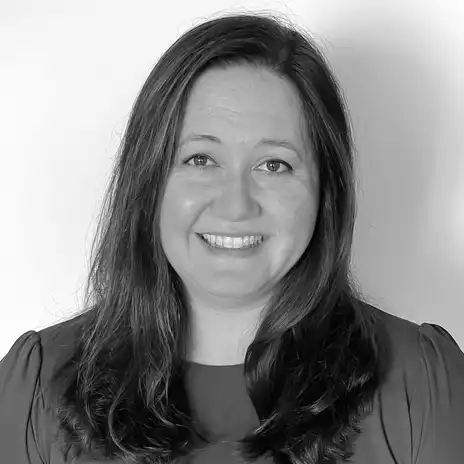
Audrey Dolginoff is an experienced special educator who has worked in both public and private school settings in Washington, DC and Nevada, including self-contained, inclusion, and resource classrooms, as well as private tutoring. She also served as a Special Education Instructional Facilitator in Nevada. Audrey earned her Master’s in Special Education: Learning Disabilities from American University, studying under Sally L. Smith. She is trained in a range of multi-sensory, structured reading and writing programs, including Orton-Gillingham, Lindamood-Bell, and Read Well.
Julia Carpenter
Julia Carpenter is a veteran special educator with 20 years of experience supporting students with diverse learning needs in the DC area. She tutors children with learning differences, consults with families and schools on individualized education plans, and helps students with brain injuries successfully transition back to school. Julia has presented at conferences including the National Museum of Health and Medicine and LDA, and leads workshops on dyslexia, reading and writing strategies, math using manipulatives, ADHD, and executive functioning. She holds an Ed.S. in Acquired Brain Injury and Transitional Education from George Washington University, along with a Master’s in Special Education and a BA in Elementary Education. She is trained in Phono-Graphix, Wilson, Orton-Gillingham, Lindamood-Bell LiPS, and Visualizing & Verbalizing.
Michelle Michlik
Michelle Michlik is a dedicated special educator with over 20 years of experience in public and private schools throughout the DMV area. She is trained in Orton-Gillingham for K–12 and is committed to hands-on, multi-sensory instruction that supports a wide range of learning differences, including dyslexia, dysgraphia, anxiety, and ASD. Outside the classroom, she enjoys life in Fairfax County with her two children and three dogs—one of whom proudly serves as a therapy reading dog.
How it works
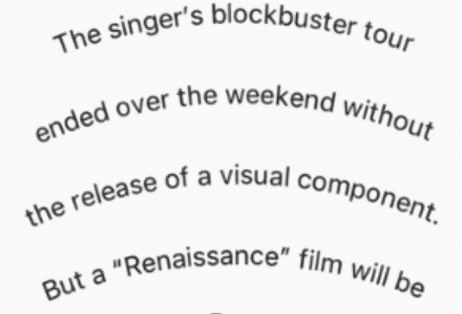
In traditional reading, the eyes move in short, jumpy saccades along a straight line. For readers with visual-origin dyslexia, this linear format causes frequent loss of place, word skipping, and decoding fatigue. Summerbell’s arc repositions the text into a gentle curve, stabilizing visual tracking and reducing stress on the ocular muscles. This makes reading smoother, faster, and more comprehensible.
Traditional dyslexia interventions focus on remediation, trying to “fix” reading deficits. Summerbell’s science reframes dyslexia as a different visual and cognitive pattern, not a disorder.By meeting the brain halfway, visually rather than punitively, it offers a practical, empowering accommodation that democratizes literacy access.